

If you’ve heard casual references to an upside down pineapple or a loofah on a car, you’ve already bumped into swinger signs many people miss.
Swingers symbols are often used as non-verbal cues in specific settings, like lifestyle cruises, adult clubs, couples retreats, and private communities. Others are rumors, inside jokes, or internet lore that sound more reliable than they are. An upside-down pineapple might be a swinger sign, or it might just be a pineapple pattern.
This guide breaks down common swinger signs, where they show up, how to read them without awkward assumptions, and why consent matters more than any symbol.
Exploring the Swinger Lifestyle
Swinging is a type of consensual non-monogamy where couples, and sometimes singles, explore sexual relations with others by agreement. For many, swinger life is about shared desire, trust, and community, not replacing a primary relationship. Before anything happens, couples usually set rules around what’s allowed, what’s off limits, safer sex practices, and how much detail each partner wants afterward.
Defining Swinger Culture
People often discover the swinger lifestyle through dating platforms, adult clubs, private parties, swinger cruises, podcasts, social media, or friends who are already part of the swinging community. Some are curious beginners, and others have been in the lifestyle for years and prefer not to advertise it publicly.
Some couples attend social swingers events only; others prefer a “soft swap” (kissing, touching, or oral sex, but no penetrative sex), “full swap” (may include penetrative sex), hotwife dating, same-room play, separate-room play, or flirting. The common thread is consent.
Historical Context of Swinger Symbols
Swinger symbols developed because people in the lifestyle often needed ways to find each other without announcing their private sex lives to everyone around them. A pineapple charm, black ring, wristband, coded phrase, or piece of home decor can work like a quiet nod in the right setting. The problem is that once those signs hit TikTok, Reddit, wikiHow, and joke articles, they start losing their insider meaning. Today, a swinger symbol may suggest curiosity or familiarity with the lifestyle, but it does not confirm someone’s identity, availability, boundaries, or consent.
The Infamous Upside-Down Pineapple
The upside down pineapple might be the most recognizable swinger sign. It often suggests that someone is open to swinging, partner swapping, or meeting other lifestyle-friendly adults.
However – an upside-down pineapple on a swinger’s lifestyle cruise ship cabin door probably has a different meaning than your friend’s pineapple pajamas or a neighbor’s summer doormat! Pineapples are also a common hospitality symbol in tropical design motifs, and vacation decor.
While the upside down pineapple is widely associated with swinger culture, it’s not a guaranteed invitation.
Origins of the Pineapple Symbol
The pineapple has long been associated with welcome, hosting, and hospitality. That background likely helped it become a useful symbol for adults who wanted to signal openness, playfulness, or invitation without saying anything explicit.
Popularity on Cruise Ships
Cruises helped make the upside down pineapple famous because cabin doors, lanyards, wristbands, and theme-night outfits give couples easy ways to signal interest without walking up to strangers cold. On a swinger-specific cruise, you might see pineapple door magnets, matching wristbands, glow sticks at silent discos, or cruise card lanyards that help guests recognize who is part of the group. Wristbands usually come from the event host and may be used for a check-in, private parties, VIP areas, Playroom access, or age verification. Some events use colors for comfort level, relationship status, or participation preferences, but there is no universal wristband code, so ask the host before assuming.
Impact on Swinger Identity
Privacy is part of swinger identity for a reason. People in the lifestyle may have jobs, families, custody concerns, conservative communities, or personal boundaries around who gets access to their sex life. That’s why many swinger signals are subtle, deniable, and tied to context.
Beyond the Pineapple: Other Common Swinger Symbols
Pineapples usually get most of the attention, but they’re not the only symbol used in the swing lifestyle. Other recognizable symbols might be black rings on the right hand, anklet, pampas grass in the front yard, garden gnomes, flamingos, hot tub setups, and other home decorations or garden gear.
These should be taken for face value, not confirmed codes. A person can display pink flamingos or a garden gnome without having any idea about the swinger’s connection. We bet you won’t look at a garden gnome the same way again, though!
Loofahs on Cars
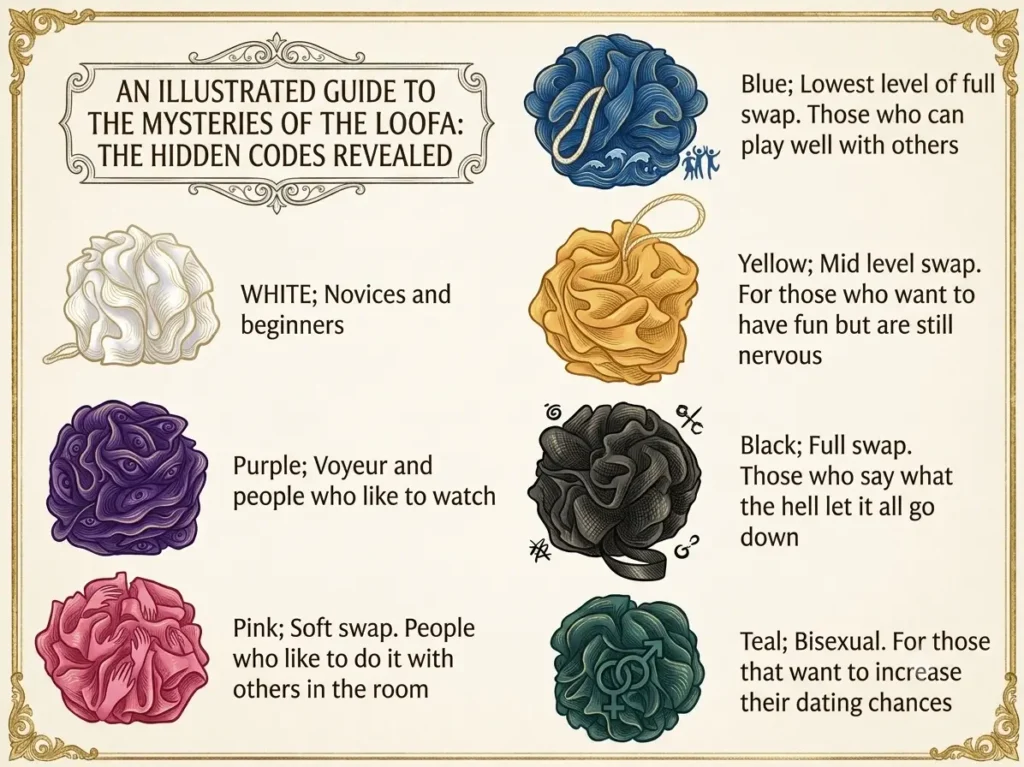
The swinger connection comes from internet lore known as the “Loofah Code.” According to online rumors, different loofah colors were said to signal adult lifestyle preferences, boundaries, or interests. The story is most often linked to The Villages in Florida, where golf carts, packed parking lots, and playful car markers are common. Still, the Loofah Code is best treated as rumor, not a reliable swinger sign in public.
The Meaning of Black Rings
Black rings became a swinger signal because they’re subtle, easy to wear, and noticeable if someone knows what to look for. In some lifestyle circles, a black ring on the right hand, especially the right middle or ring finger, can suggest openness to meeting other swingers. It’s an opener, not a proposition: someone at an adult club, resort, cruise, or meet-and-greet might ask, “Are we in the same club?” Some people avoid the right middle finger because black rings are also tied to asexuality, so in swinger-specific spaces, the ring is best read as a soft cue, not a full message.
Anklets and Their Significance
Anklets come up in swinger and hotwife circles as a subtle sign of sexual openness, especially for women in committed relationships. Paired with pineapple jewelry on a lifestyle cruise, worn at an adult club, or shown in a dating profile that mentions “the lifestyle,” an anklet can suggest flirtation, partner-approved attention, or hotwife interest.
There’s no standard anklet code across the swinging community. In lifestyle spaces, it’s a soft signal: visible enough to invite curiosity, subtle enough to stay discreet.
Decoding Garden Gnomes in Gardens
Garden gnomes are one of the more playful alleged swinger signs, mostly because they feel intentionally cheeky on a cruise cabin door display, or a swinger party setup. In lifestyle spaces, gnomes and other themed decor may be used to mark a private gathering, point guests toward the right room, identify a lifestyle-friendly cabin, or make the host’s space easier to find.
Non-Verbal Communication in Swinger Culture
Non-verbal communication can play a role in lifestyle settings. Aside from visual symbols like gnomes or pineapples, body language, proximity, dancing, or a partner’s private cue may help people gauge comfort or attraction.
However, non-verbal cues are not consent. A look, smile, outfit, tattoo, ring, or symbol may express interest, but it does not authorize touch, sexual comments, or pressure to go further, so ask first.
Use of Pinches and Touches
Some couples set private check-in signals before adult clubs, lifestyle cruises, house parties, or Playroom events. A pinch on the thigh, hand squeeze, wrist tap, or specific look may mean “I’m interested,” “slow down,” “check in,” “I need a break,” or let’s leave.” These private signals help partners communicate quickly when saying the full sentence out loud would feel awkward or too exposing.
Pinches and touches can help couples pause, reconnect, adjust boundaries, and leave with trust intact.
The Role of Eye Contact
In swinger spaces, eye contact is often the first layer of flirting. At a club, lifestyle cruise, or private party, a longer look, smile, glance away, and look back can signal interest without making a move. Couples may also use eye contact as a private check-in across the room: “Are you comfortable?” or “Should we keep talking to them?”
Navigating Social Dynamics on Themed Cruises
Cruises for swingers have rules that shift by host, group, and event area. A meet-and-greet may be social only, a pool party may allow flirting but no sexual activity, a silent disco may use glow sticks or wristbands so guests can identify various interests, and a playroom usually has stricter rules around consent, phones, nudity, safer sex supplies, and touch.
Treat the event host as the source of truth. Read the rules, attend the welcome session, and if anything is left unanswered, ask.
Swinger-Specific Language
Swinger-specific language is often more useful than any symbol because it tells you what someone actually means. A black ring, pineapple, or wristband may open a conversation, but terms like “soft swap,” “same-room play,” or “social only” explain boundaries, comfort level, and expectations. In lifestyle spaces, knowing the language helps couples avoid awkward assumptions and ask better questions before attraction turns into a decision.
Vocabulary and Slang within Communities
Quick swinger glossary:
- “Soft swap” means kissing, touching, or oral sex, but no intercourse.
- “Full swap” may include intercourse.
- “Same-room play” means partners stay visible;
- “Separate-room play” means they may play apart.
- “Unicorn” is a single woman, often bisexual, open to joining a couple.
- “Stag and vixen” and “hotwife” both involve a partnered woman receiving outside sexual attention with her partner’s knowledge or support.
- “Vanilla” means non-lifestyle people or settings.
- “Playdate” is a planned sexual meetup;
- “Playroom” is a designated sexual space at a club, party, or lifestyle event.
- “LS” means “the lifestyle,”
- “ENM” means ethical non-monogamy,
- and “Social only” means meeting people without playing.
If someone says, “We’re soft swap only” or “We’re social tonight,” they’re giving boundary information, so ask: “What does that mean for you two?”
Interpreting Contextual Conversations
Context explains more than a symbol. Mentions of lifestyle cruises, adult clubs, ENM dating, hotel takeovers, play parties, hotwife dynamics, or private meet-and-greets may be a soft signal.
People often use indirect wording: “open-minded,” “lifestyle friendly,” “couples only,” “social tonight,” or “here with the group.” A good follow-up: “When you say open-minded, what does that mean for you?”
Misunderstandings and Clarifications
Misunderstandings usually happen when someone treats a hint like a green light. A couple saying they’re “open-minded” at brunch is not the same as a couple saying it at an adult resort, hotel takeover, lifestyle cruise, or meet-and-greet. In the right setting, phrases like “We’re here with the group,” “We’re social tonight,” “We only do same-room,” “We’re just watching,” or “We met on an LS app” may signal lifestyle experience. The safest move is to ask without cornering them: “Are you here socially tonight?” or “When you say lifestyle friendly, what does that mean for you?” That gives them room to clarify, flirt, or shut the door without awkwardness.
Addressing Misconceptions
Fictional swinging is often reduced to pineapples, key parties, cruise gossip, and secret codes. Real swinger life is more practical: condoms, testing, club rules, alcohol limits, privacy, jealousy, and pause plans.
Being in the lifestyle does not mean being available to everyone. Some couples only dance. Some attend events for months before playing. Some only play with trusted friends. Some are always social only.
Common Myths About Swinger Culture
The biggest myth is that one object, phrase, or swinger sign tells the whole story. It doesn’t. Symbols can start a conversation, but they don’t explain boundaries, relationship status, attraction, or consent.
Swingers also aren’t out “recruiting” random people. Experienced lifestyle couples usually prefer informed adults who understand consent, safer sex, privacy, and clear communication.
Swinging is not one universal experience, either. Some couples are soft swap, some full swap, some only watch, some are hotwife-focused, and some attend events for dinners, dancing, classes, hotel takeovers, pool parties, or social nights without playing at all.
Encouraging Open-Minded Exploration
Curious couples do not need to start with a Playroom, full swap, or high-pressure invitation. Start social: read beginner guides, listen to a swinger podcast, take a club tour, attend a meet-and-greet, or choose an event where play is optional. Before going, have a private strategy session about what sounds exciting, what is off limits, what kind of flirting is okay, safer sex rules, alcohol limits, and what signal means “pause” or “leave.”
A good beginner’s rule is “observe first, decide later,” because you may leave feeling more curious, less curious, or surprised by what made you uncomfortable. Swinging works best when both partners move at the pace of the person who needs more time, not the person ready to jump in.
Conclusion
Secret swinger signs can be useful, but they’re conversation cues, not confirmations. The upside down pineapple, black rings, anklets, wristbands, loofahs, pampas grass, garden gnomes, flamingos, hot tubs, glow sticks, and cruise accessories only make sense in context.
For curious couples, don’t decode strangers. Learn the language, start social, ask respectful questions, and talk through boundaries with your partner first. Swinger life works best when curiosity comes with privacy, emotional awareness, and clear consent.
FAQS
Are there subtle signs someone is part of the swinger community?
Yes, but the clearest signs show up in lifestyle spaces. An upside down pineapple on a swinger-specific cruise, a black ring at an adult club, or an anklet in a hotwife dating profile may suggest someone knows the hidden language.
What are common secret swinger signs?
Common secret swinger signs include upside down pineapples, black rings, anklets, wristbands, loofahs, pampas grass, flamingos, garden gnomes, white landscaping rocks, a hot tub, glow sticks, and cruise accessories. Read the scene.
How do you discreetly signal you’re a swinger?
People signal discreetly through lifestyle dating profiles, private groups, adult clubs, swinger-specific cruises, pineapple jewelry, wristbands, black rings, or coded profile language: “LS,” “open-minded,” and “soft swap only.”
What is the deal with pineapples and swingers?
Pineapples were tied to hospitality, so the swinging community adopted them as a wink. The upside down pineapple is the version most linked to swinger signs.
Do swingers put pineapples on their porch?
A porch pineapple is not proof. It may be decor, an inside joke, or a signal meaningful only to people who know the homeowner.
How do swingers communicate discreetly?
Swingers may use dating apps, private groups, wristbands, cruise door decorations, secret symbols, hidden codes, eye contact, or partner cues like a pinch on the thigh. Hosts may explain Playroom access and social-only areas.
What are the risks of misreading secret signals?
Misreading secret signals can expose private information, damage trust, or turn curiosity into unwanted attention.
How can I ask about swinging?
Keep it private: “I noticed your pineapple pin. Is there a story there?” or “That black ring made me wonder if you know the lifestyle.”
Why search “secret swinger sings”?
It’s a typo for “secret swinger signs,” meaning discreet swinger signals, secret symbols, swinger icons, hidden language, and hidden codes.